Launch offer — valid today only

📄 Digital book in PDF · read it on your phone or print it

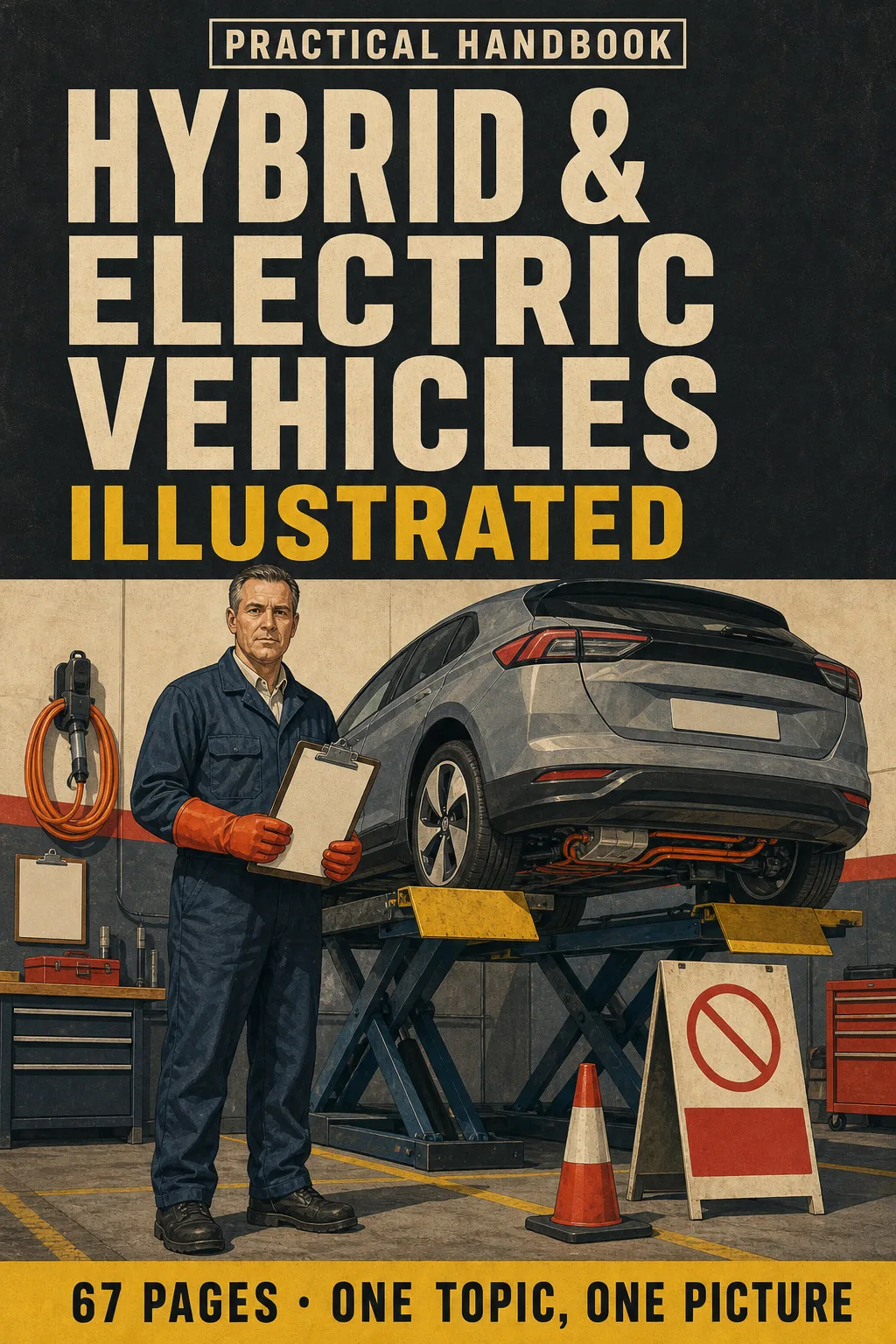
Hybrid and EV High Voltage for Level 2 and Level 3, Explained in Drawings The Same Safe Order Every Time

Layouts, orange cabling, the service disconnect, PPE, safe isolation, proving dead, charging, the MOT and re-commissioning. Each topic has its own page: the drawing first, then what you need to remember. 67 illustrated pages.

START STUDYING THIS WAY

🔒 Secure checkout · PDF by email · 30-day guarantee

Every topic, its own pageThe safety sequence drawn, with the explanation alongside
67 illustrated pages8 parts, from what changes on the ramp to the assessment-ready review
Up-to-date sourcesHSE guidance HSG261 and GS38, the Electricity at Work Regulations 1989 and the DVSA MOT inspection manual
PDF by emailFormat

Look Inside the Book

Every page has one large drawing and a box with the steps and numbers you need to know:

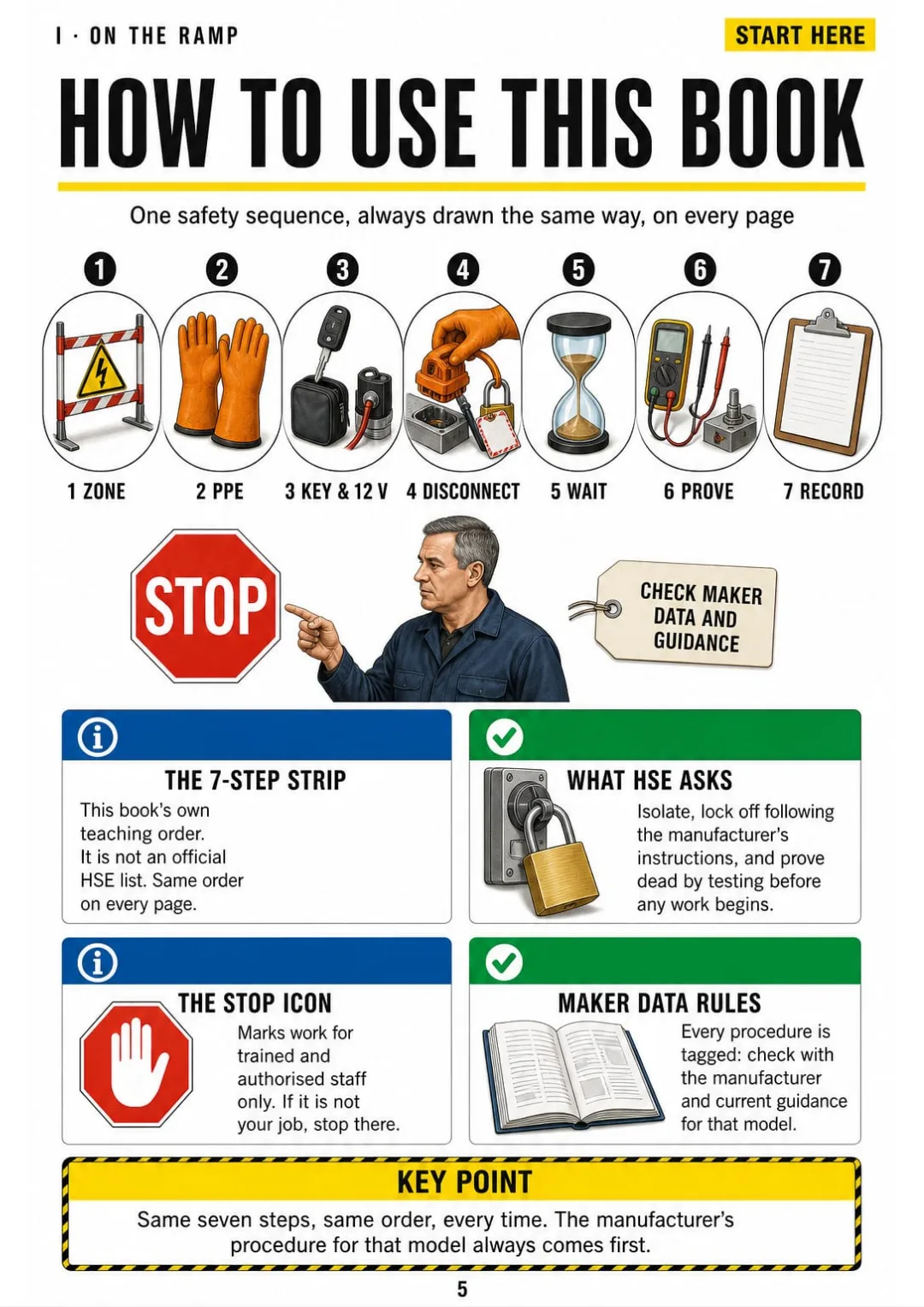
The 7-step safety strip and the STOP icon: how every page is organised
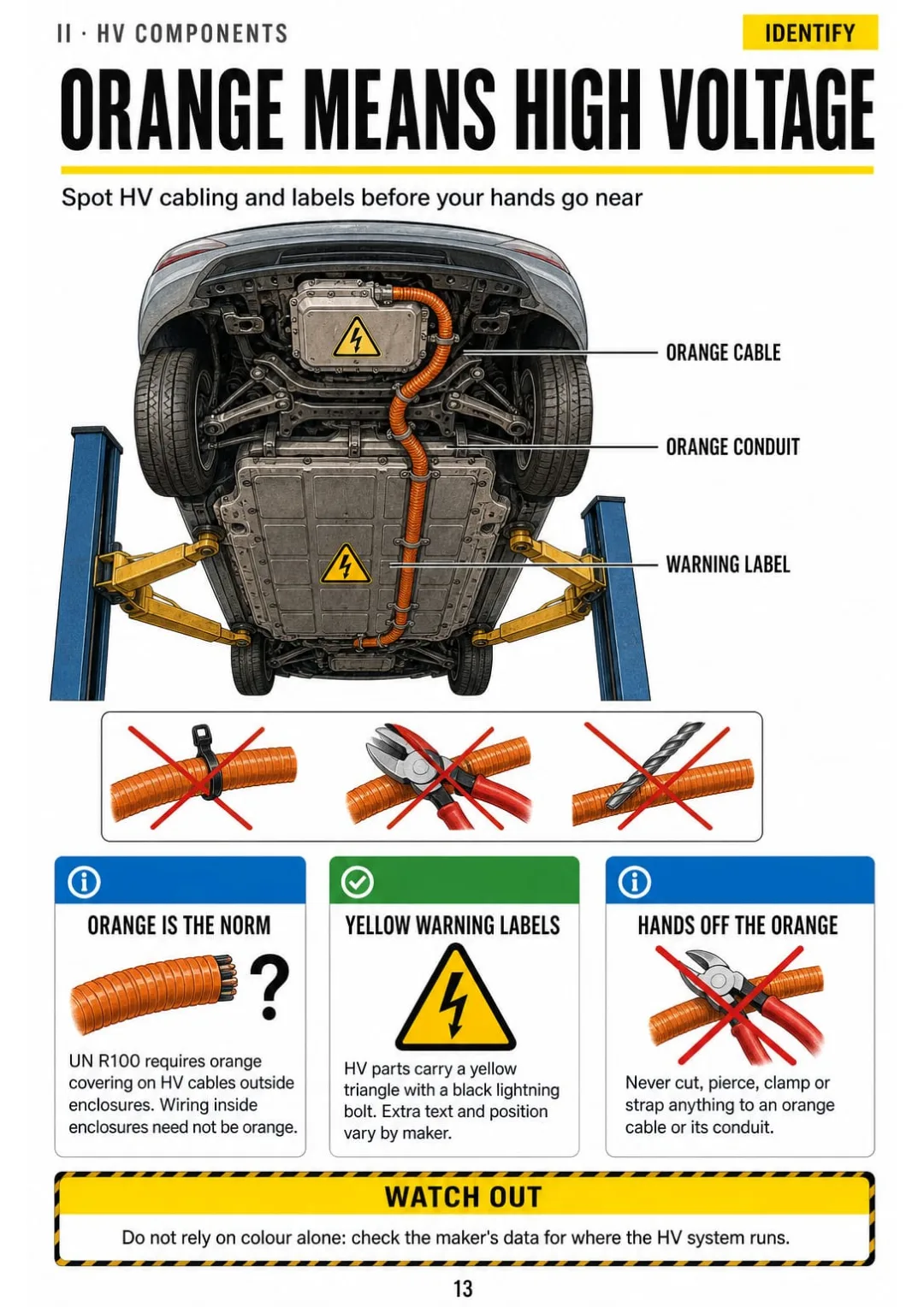
Orange cable, yellow lightning-bolt label: the norm, not a guarantee.
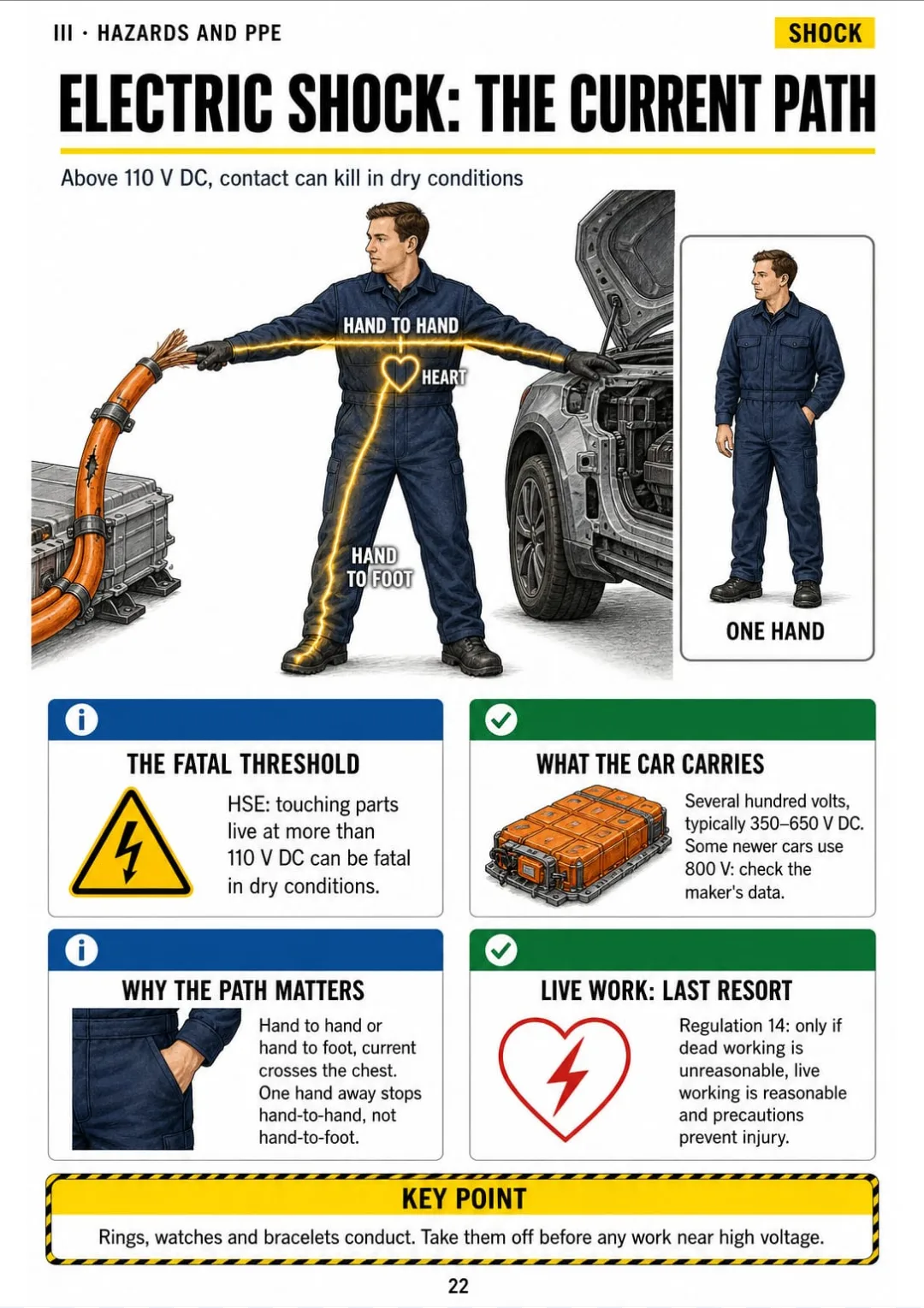
Above 110 V DC can be fatal; hybrids and EVs run at hundreds of volts
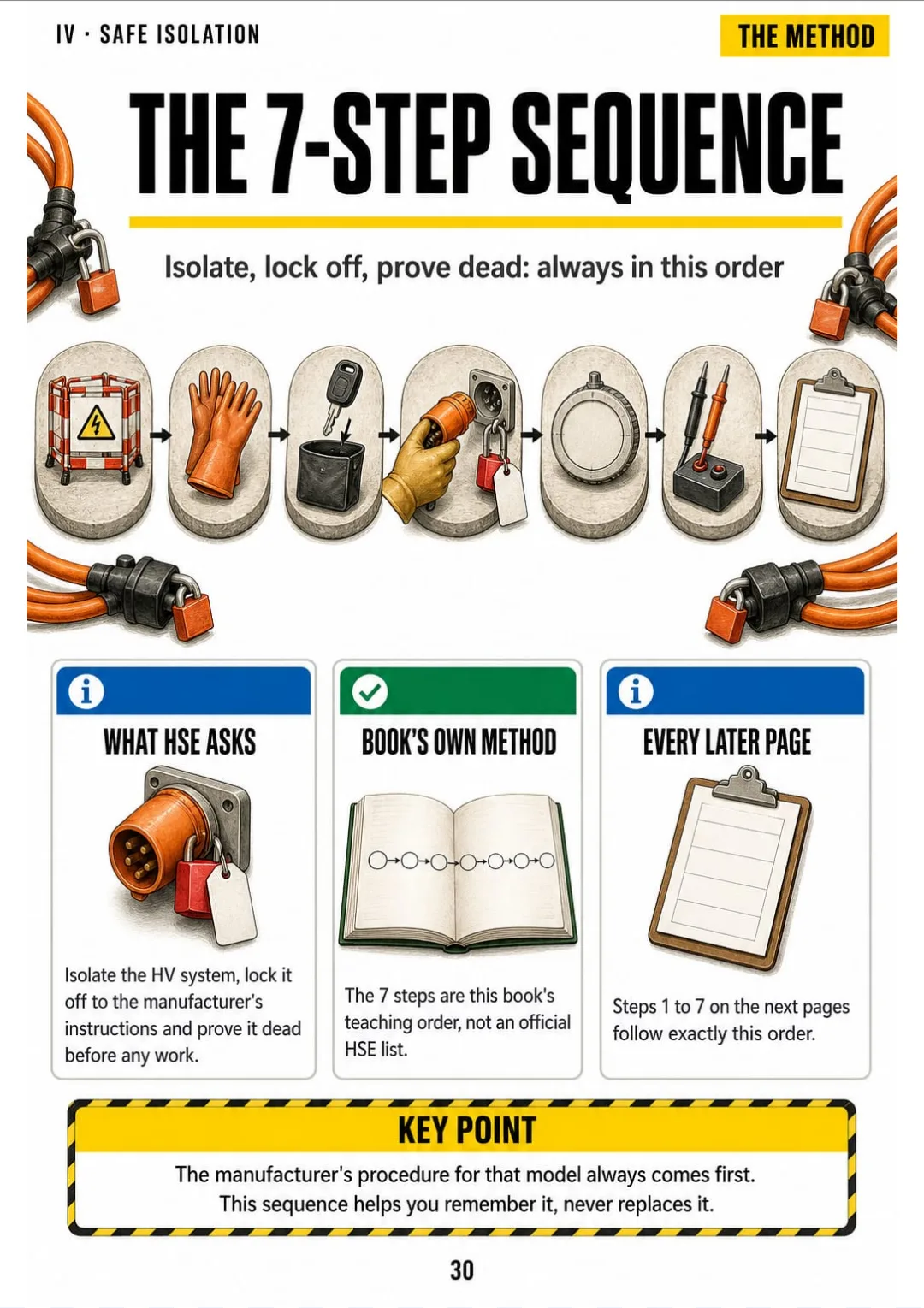
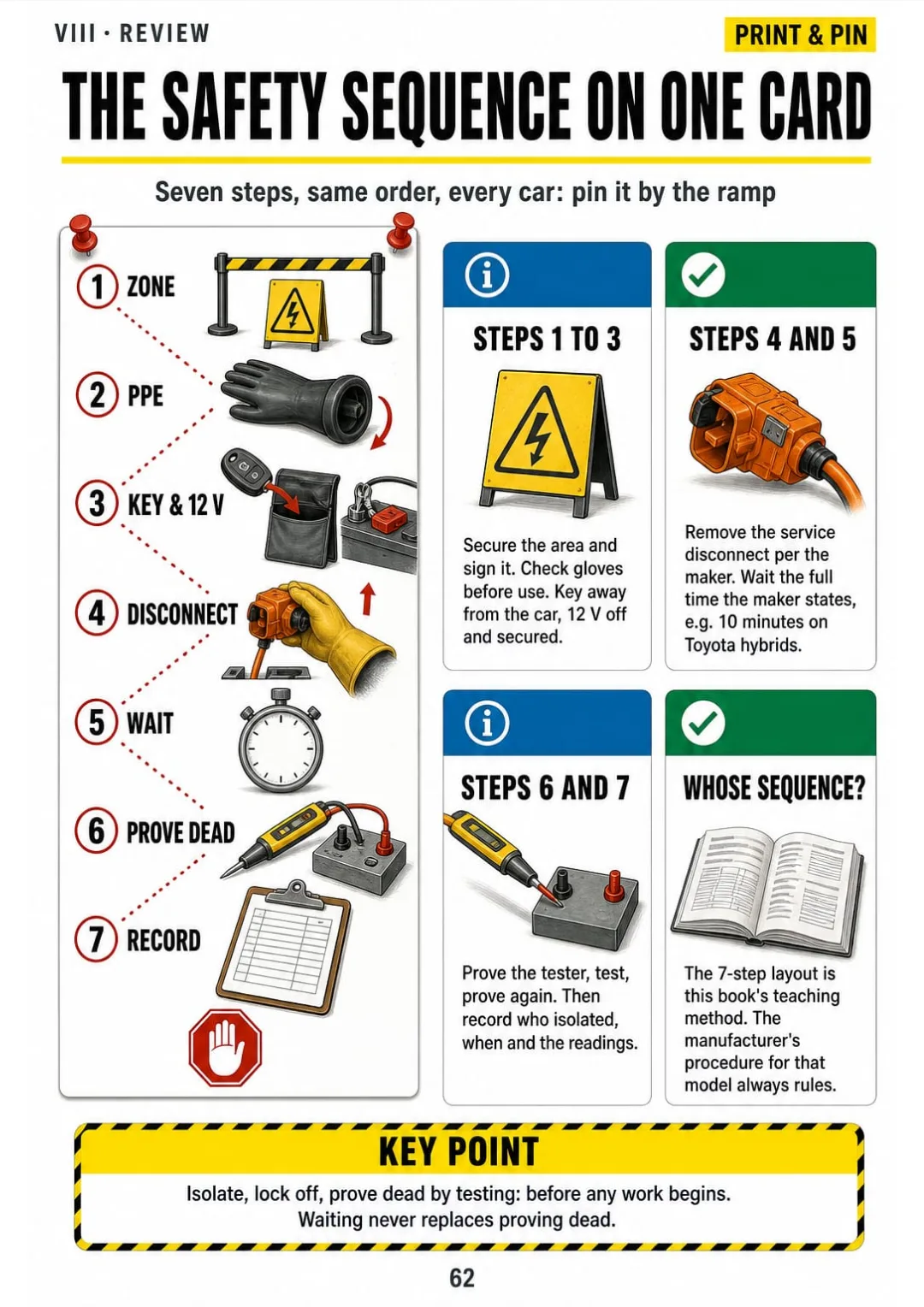
Isolate, lock off, prove dead: the whole method drawn as one path in 7 steps
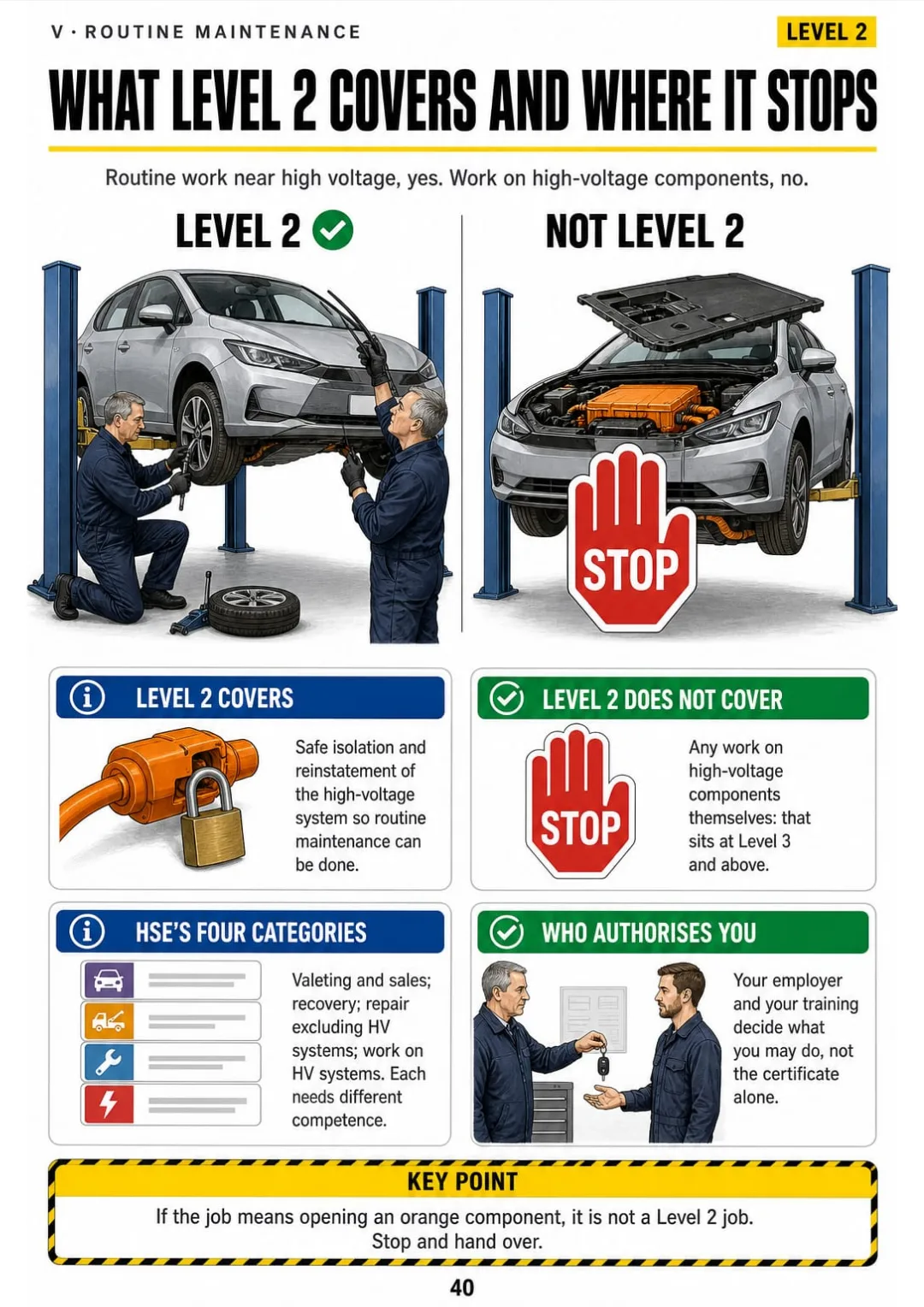
Level 2: isolate and reinstate for routine work; HV components are a STOP
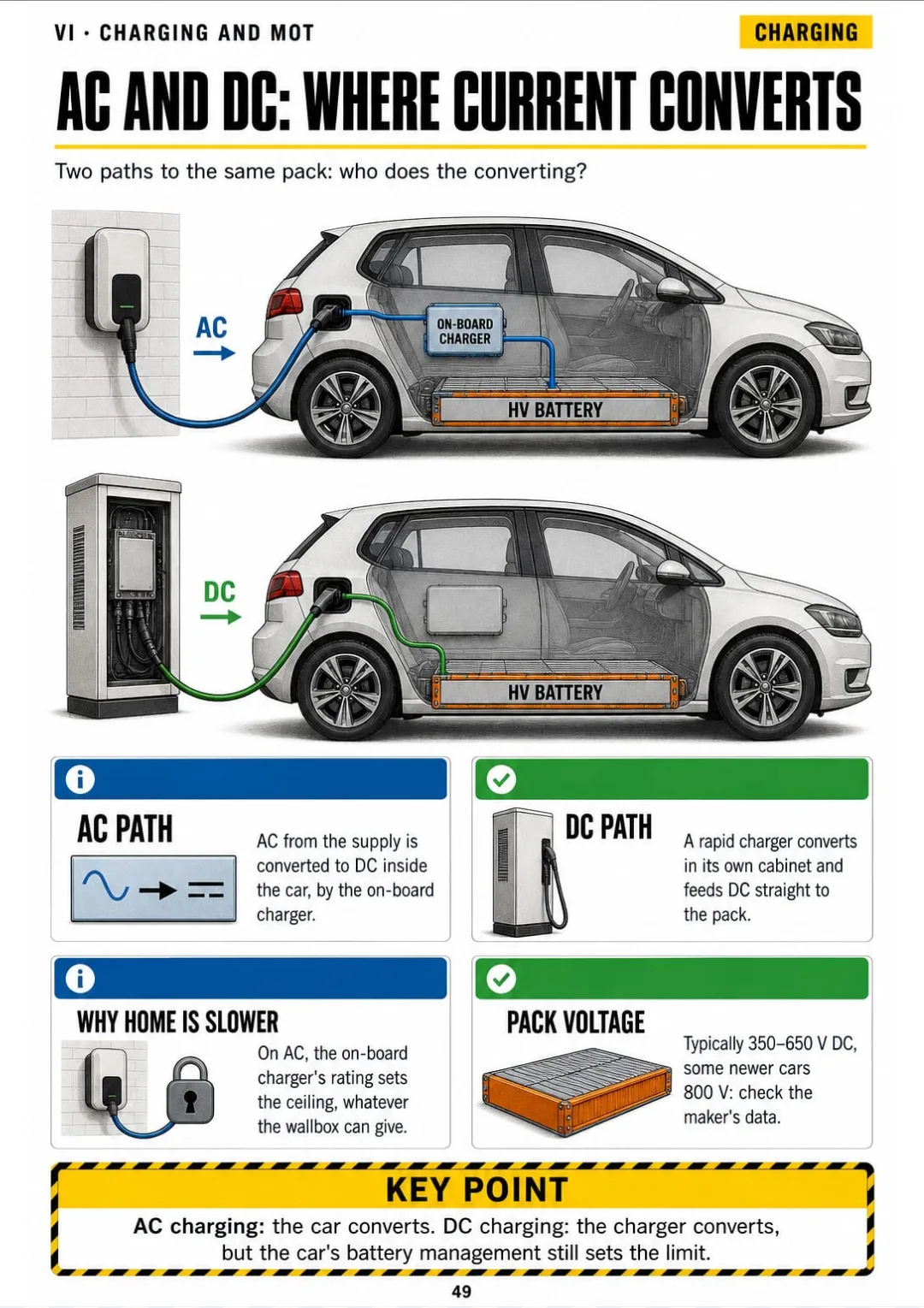
AC is converted by the car's on-board charger; DC rapid goes straight to the pack.
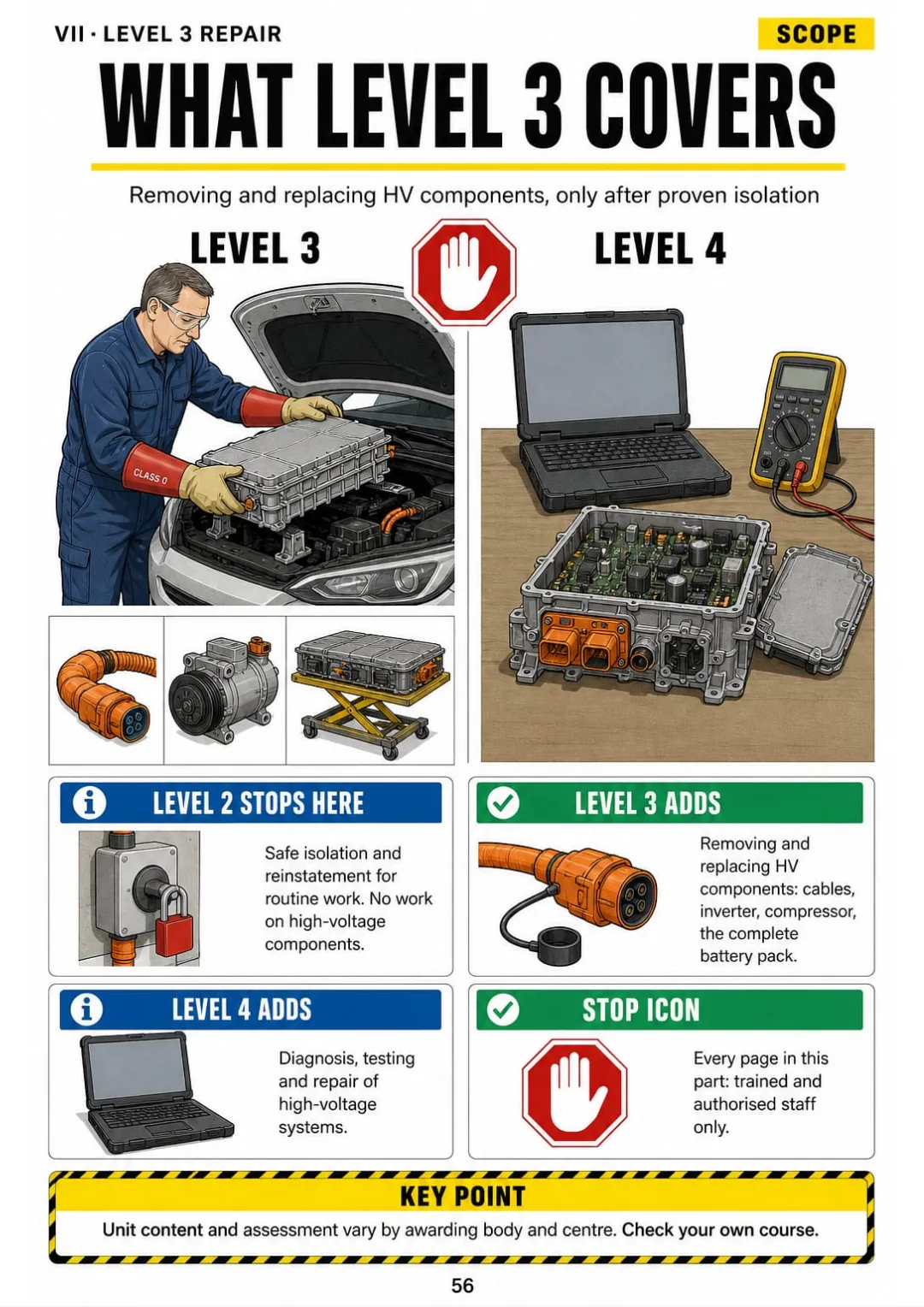
Level 2 isolates, Level 3 removes and replaces, Level 4 diagnoses and repairs.
Zone, PPE, key and 12 V, disconnect, wait, prove dead, record: one printable card.

Swipe to see more →

These are real pages from the book. The table of contents is the full one: 8 parts and 63 topics.

The Problem Isn't You. It's How It Was Explained to You.

You're sitting the Level 2 knowledge test and the question looks simple: why can the high-voltage side of a hybrid kill when the 12 V battery can't? You know the answer is in your notes somewhere, but it won't come out.

The course notes cover electric shock in three dense paragraphs about current, resistance and DC thresholds. You read about a current path you never actually saw.

Above 110 V DC can be fatal; hybrids and EVs run at hundreds of volts

In the book, electric shock is one page. The current is drawn as a line from one hand, across the chest, to the other hand or down to the foot, with a box beside it: on a vehicle, high voltage starts above 60 V DC, and hybrids and EVs run at hundreds of volts.

The same goes for orange cabling, the service disconnect, Class 0 gloves, the wait time and proving dead: each one has its own page.

You understand why the safety sequence exists, and you follow it on the ramp without going back to the manual.

COMPARE FOR YOURSELF

The Same Topic, Two Ways to Study It

THIS
  • The manual: line after line
  • Cable colours and warning labels explained only in words
  • You arrive at the assessment with doubts
High-voltage conductors in hybrid and electric vehicles are conventionally identified by orange outer sheathing, and associated components may carry a yellow triangular warning label bearing a lightning-bolt symbol. Technicians should, however, be aware that colour identification constitutes a convention rather than a guarantee of circuit voltage, since sheathing may be faded, damaged, painted or replaced with non-standard materials during previous repairs. Consequently, the absence of orange identification shall not under any circumstances be taken as confirmation that a conductor is safe to handle.
FOR THIS
  • Orange cabling and the warning label in one drawing
  • The rules in a box
  • You see it and you get it
Orange cable, yellow lightning-bolt label: the norm, not a guarantee.
CONTENTS

Take a Look at the 8 Parts and 63 Topics

What changes on the ramp, high-voltage components, hazards and PPE, safe isolation and proving dead, routine maintenance, charging and the MOT, repair and re-commissioning, and an assessment-ready review: 67 pages, all illustrated.

IWhat Changes on the Ramp · pp. 5-12
  1. How to Use This Book: The Safety Sequence and the STOP Icon
  2. What Counts as High Voltage in a Vehicle
  3. Mild Hybrid (48 V): What It Does and What It Does Not
  4. Full Hybrid: Two Motors, One Gearbox
  5. Plug-in Hybrid: A Bigger Pack and a Charge Port
  6. Battery Electric Vehicle: No Engine, Same 12 V Battery
  7. Four Layouts Side by Side
  8. Ready Mode: The Car That Looks Off but Is On
IIHigh-Voltage Components · pp. 13-21
  1. Orange Means High Voltage
  2. The High-Voltage Battery Pack
  3. Contactors and the Pre-charge Circuit
  4. The Inverter and Its Capacitors
  5. Motor-Generator and Regenerative Braking
  6. DC-DC Converter: How the 12 V Battery Gets Charged
  7. Electric Air-Con Compressor
  8. Battery and Inverter Cooling Circuits
  9. The Service Disconnect: Plug, Switch or Pyro Fuse
IIIHazards and PPE · pp. 22-29
  1. Electric Shock: What the Current Does
  2. Arc Flash and Burns
  3. Thermal Runaway and Battery Fire
  4. Silent Movement and Unexpected Start
  5. Insulated Gloves: Class 0 and How to Check Them
  6. Face Shield, Clothing and Footwear
  7. Insulated Tools and the Rescue Hook
  8. Emergency: A Colleague Is Stuck to a Live Part
IVSafe Isolation and Proving Dead · pp. 30-39
  1. The 7-Step Sequence on One Page
  2. Step 1: Clear Zone and Warning Signs
  3. Step 2: PPE Checked Before Use
  4. Step 3: Key Out and 12 V Disconnected
  5. Step 4: Remove the Service Disconnect
  6. Step 5: Respect the Wait Time
  7. Your Test Kit: Voltage Indicator, Leads and Proving Unit
  8. Step 6: Prove, Test, Prove
  9. Step 7: Record the Isolation
  10. Mistakes That Undo the Isolation
VRoutine Maintenance (Level 2) · pp. 40-48
  1. What Level 2 Lets You Do and Where It Stops
  2. Lifting a Hybrid or EV
  3. Inspecting Orange Cables Without Touching Inside
  4. Brakes on a Car That Brakes by Itself
  5. Tyres, Weight and Wear
  6. Engine Servicing on a Hybrid
  7. The 12 V Battery: Testing and Jump Starting
  8. Towing and Moving a Car That Won't Start
  9. Diagnostics: Reading Fault Codes Safely
VICharging and the MOT · pp. 49-55
  1. AC and DC Charging: Where the Current Is Converted
  2. Charging Modes 1 to 4
  3. Connectors: Type 2, CCS and CHAdeMO
  4. Inspecting the Charge Port and Cable
  5. Battery Health and State of Charge
  6. The MOT on a Hybrid or EV: What the Tester Looks At
  7. Ready Mode in the MOT Bay
VIIRepair and Re-commissioning (Level 3) · pp. 56-61
  1. What Level 3 Covers: Repair and Replacement
  2. Insulation Resistance Testing
  3. Removing an HV Component in Order
  4. Handling and Storing a Removed Pack
  5. Re-commissioning: Putting the Car Back to Life
  6. Accident-Damaged Hybrids and EVs
VIIIAssessment-Ready Review · pp. 62-67
  1. The Safety Sequence on One Card
  2. Numbers to Know
  3. Words Most Often Asked in the Knowledge Test
  4. The Practical Assessment: What the Assessor Watches
  5. Common Mistakes on the Ramp
  6. Before You Say Yes to the Job

One Page, One Topic, All Clear

Think of it this way:

A plug-in hybrid comes in for brakes. Before you put a hand on it, you need two answers straight in your head: does this job need isolating, and if it does, in what order: zone, PPE, key and 12 V, disconnect, wait, prove dead, record.

You open the 7-step sequence page and see the whole method drawn as one path, one picture per step, with the STOP icon wherever the work is only for trained and authorised staff.

Level 2: isolate and reinstate for routine work; HV components are a STOP

The same with the four layouts side by side, the service disconnect, Class 0 gloves, ready mode and re-commissioning: each one on its own page.

Hybrid & Electric Vehicles Illustrated is 8 parts and 63 topics, all drawn, and it ends with the safety sequence on one card, the numbers to know and what the assessor watches in the practical.

What you see drawn, you don't have to memorize.

What's Inside Hybrid & Electric Vehicles Illustrated:

Ipp. 5-12

What Changes on the Ramp

How to use the book, what counts as high voltage, mild, full and plug-in hybrids, the BEV, the four layouts side by side and ready mode.

IIpp. 13-21

High-Voltage Components

Orange cabling, the battery pack, contactors and pre-charge, the inverter and its capacitors, the motor-generator, the DC-DC converter, the electric A/C compressor, cooling circuits and the service disconnect.

IIIpp. 22-29

Hazards and PPE

Electric shock, arc flash, thermal runaway, silent movement, Class 0 gloves and how to check them, face shield and clothing, insulated tools, the rescue hook and the emergency.

IVpp. 30-39

Safe Isolation and Proving Dead

The 7-step sequence on one page, then each step in turn: clear zone, PPE, key out and 12 V, service disconnect, wait time, your test kit, prove-test-prove and the record. You stop guessing the order: it's always the same path.

Vpp. 40-48

Routine Maintenance (Level 2)

Where Level 2 stops, lifting, inspecting orange cables, brakes with regen, tyres, engine servicing, the 12 V battery, towing and reading fault codes safely.

VIpp. 49-55

Charging and the MOT

AC and DC charging, charging modes 1 to 4, Type 2, CCS and CHAdeMO, the charge port and cable, battery health, the MOT on a hybrid or EV and ready mode in the bay.

VIIpp. 56-61

Repair and Re-commissioning (Level 3)

What Level 3 covers, insulation resistance testing, removing an HV component in order, handling a removed pack, re-commissioning and accident-damaged vehicles. You see exactly where Level 2 ends and what the next award adds.

VIIIpp. 62-67

Assessment-Ready Review

The safety sequence on one card, the numbers to know, the terms that come up most often, what the assessor watches, common mistakes and the checks before you take the job.

At the end of the book: The safety sequence on one printable card, the numbers to know and the terms that come up most often in the knowledge test.
Plus: 2 Free Books

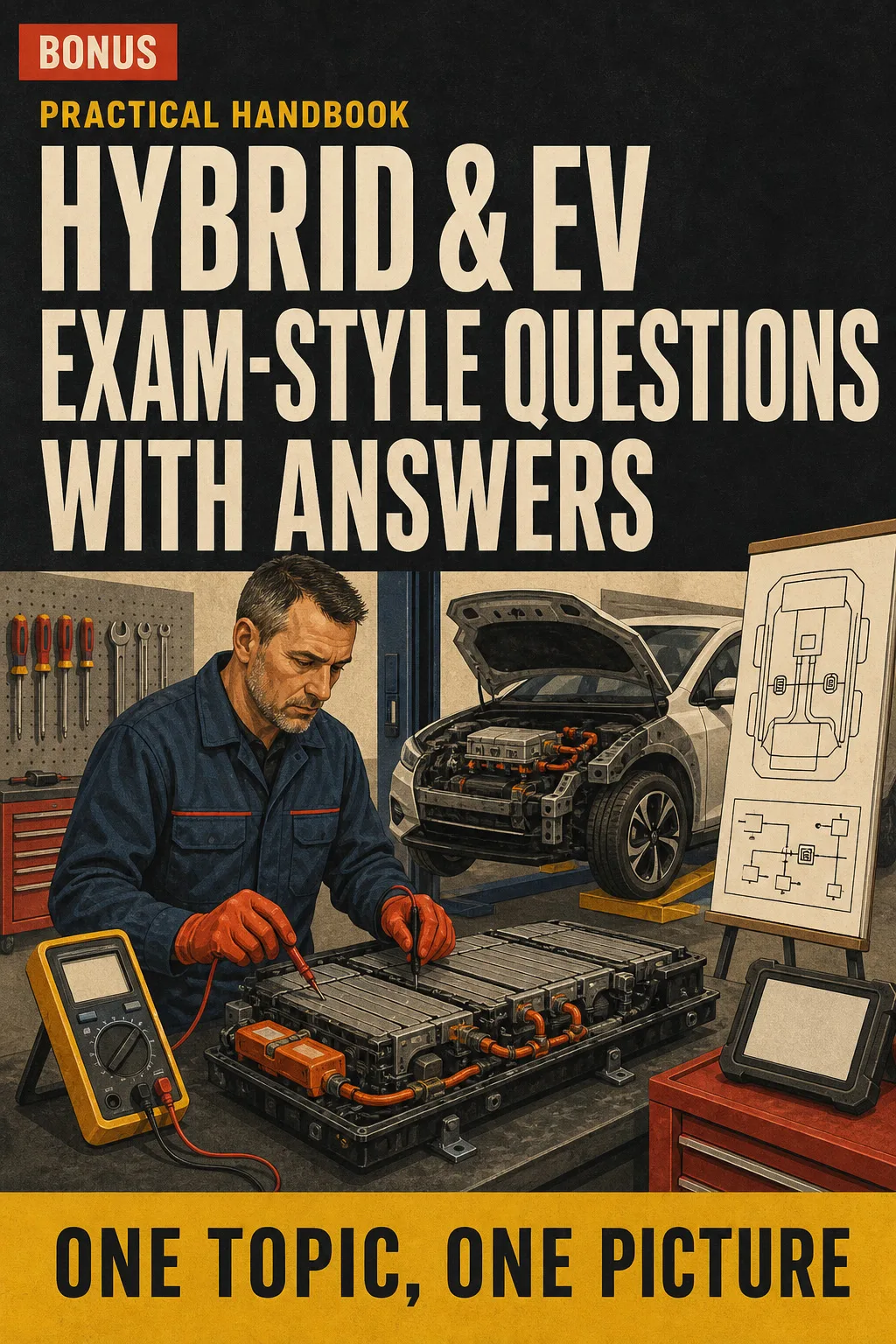
Hybrid & EV Exam-Style Questions with Answers

BONUS 1: «Hybrid & EV Exam-Style Questions with Answers»

Value on its own: US$ 17.90

Practise the kind of questions asked on the knowledge test, with every answer explained and linked to the page it comes from, so you can see what you know before the assessment.

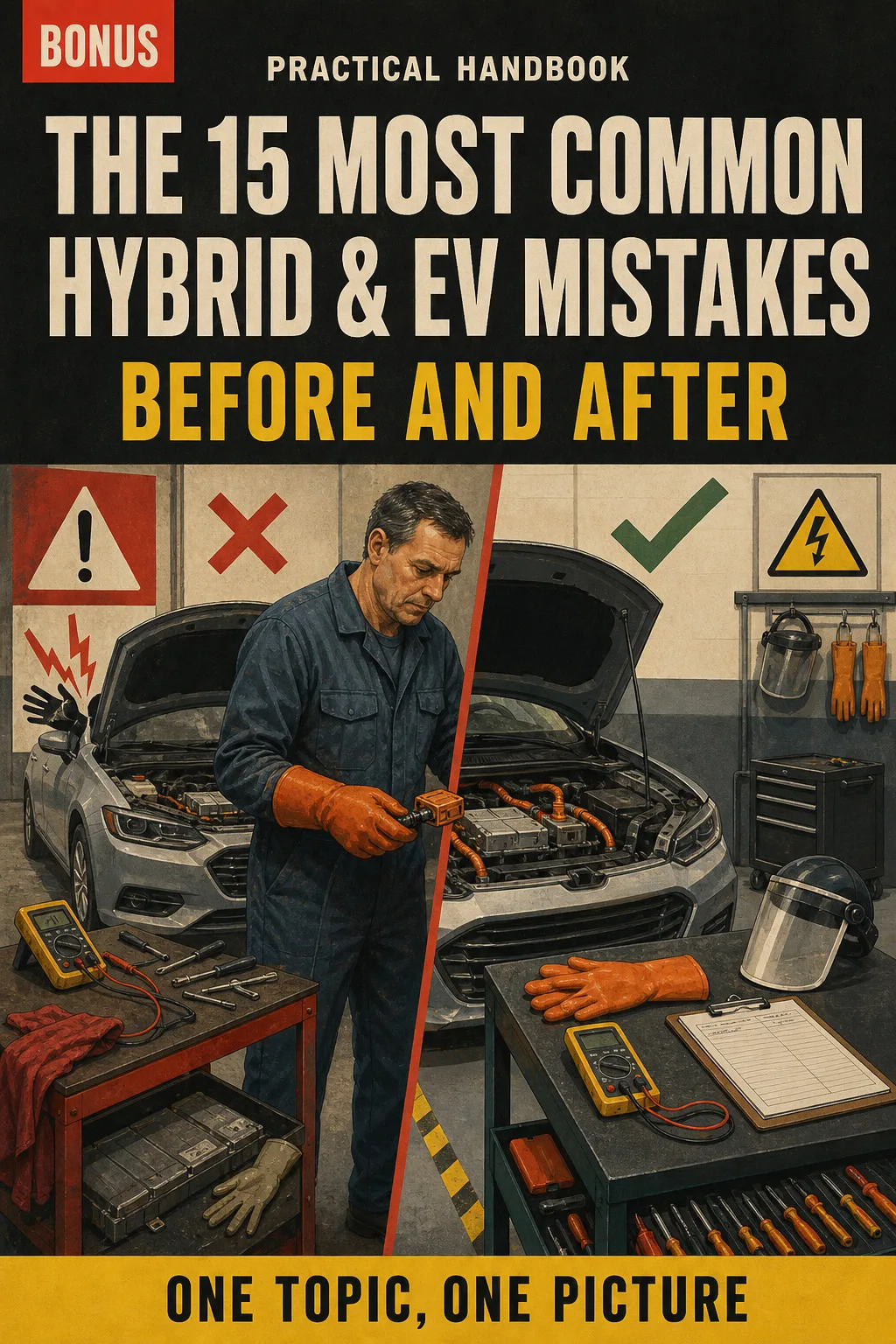
The 15 Most Common Hybrid & EV Mistakes: Before and After

BONUS 2: «The 15 Most Common Hybrid & EV Mistakes: Before and After»

Value on its own: US$ 14.90

See the errors technicians make most often around high voltage, from skipping the wait time to proving dead in the wrong order, each one drawn next to the right way to do it.

Hybrid & Electric Vehicles Illustrated with 2 Free Books

  • Hybrid & Electric Vehicles Illustrated: 67 illustrated pagesUS$ 63
  • BONUS 1: Hybrid & EV Exam-Style Questions with AnswersUS$ 17.90
  • BONUS 2: The 15 Most Common Hybrid & EV Mistakes: Before and AfterUS$ 14.90
  • High-resolution PDF to printIncluded
Total value US$ 95.80
YOUR PRICE:
US$ 27
You save US$ 68.80
YES, I WANT HYBRID & ELECTRIC VEHICLES ILLUSTRATED FOR US$ 27

📄 This is a digital PDF book sent to your email: nothing is printed or shipped.

Secure purchaseEncrypted payment30-day guarantee

PDF by email: We email you Hybrid & Electric Vehicles Illustrated as a PDF, together with the two free books. It's a single payment: no installments, no extra charges.

Who This Book Is For

You're starting the Level 2 award

You're starting the Level 2 award

You get the high-voltage side in the order the course uses: layouts, components, hazards, then isolation step by step, each one drawn.

Your assessment is coming up

Your assessment is coming up

You revise with the safety sequence on one card, the numbers to know and the terms that come up most often, so your mind doesn't go blank in the practical.

Hybrids already come into your garage

Hybrids already come into your garage

You keep the printed pages by the ramp: where Level 2 stops, lifting points, the 12 V battery and the MOT on a hybrid or EV.

Everything You Get Today

US$ 95.80US$ 27
YES, I WANT HYBRID & ELECTRIC VEHICLES ILLUSTRATED FOR US$ 27

📄 This is a digital PDF book sent to your email: nothing is printed or shipped.

30DAYS
GUARANTEE

30-Day Guarantee

Try Hybrid & Electric Vehicles Illustrated for 30 days, bonus books included.

We refund everything if the file won't open, if the book isn't what you see here, if you were charged twice or if the email doesn't arrive. Just email us.

You pay once. No subscriptions.

Frequently Asked Questions

Is it for me if I've worked on combustion engines for years and now hybrids are coming in?

Yes. It doesn't explain the car: it explains what changes with high voltage. Each procedure is marked 'check with the manufacturer and current guidance', because every make has its own steps.

Is it written for the UK, or is it generic material from another country?

It's written for UK garages and checked against current UK guidance: HSE HSG261 and GS38, the Electricity at Work Regulations 1989, the DVSA MOT inspection manual and the published requirements of the Level 2 and Level 3 hybrid and EV awards. The MOT on a hybrid or EV has its own page.

Is it official material?

No. It is an independent illustrated study book, not affiliated with or endorsed by any awarding organisation or the DVSA. It doesn't give you a certificate and doesn't count towards the award: that comes from your accredited course and assessment.

Does it replace the course or the training?

No. It helps you study and revise. High-voltage work must only be done by trained, qualified and authorised staff, following the manufacturer's procedure.

Are the practice questions the ones in the exam?

No. They are written for this book to help you practise, and each answer points to the page it comes from. They are not official exam questions.

When and how does it arrive?

As a PDF by email, to the address you enter at checkout. The two gift books arrive the same way.

Do I have to pay every month?

No. It's a one-off payment, with no subscription.

Can I have it on paper?

Yes. The PDF is ready to print, so you can keep the pages you use most in the workshop.

How does the refund work?

You have 30 days. We refund everything if the file won't open, if the book isn't what you see on this page, if you were charged twice or if the email doesn't arrive: just email us.

Before You Close This Page

No more rereading notes that don't stick.

Proving dead is drawn in front of you, step by step.

You walk into the assessment knowing where everything is.

Drawings make studying faster.

The book is right below.

One-time payment: US$ 27 · Guarantee: 30 days · PDF by email

YES, I WANT HYBRID & ELECTRIC VEHICLES ILLUSTRATED FOR US$ 27

📄 This is a digital PDF book sent to your email: nothing is printed or shipped.